

A step-by-step framework for creating high-performing service & specialty pages
A great landing page isn’t just an online brochure - it’s your practice’s opportunity to connect with potential patients, answer their most important questions, and inspire them to take action. For healthcare practices, your Specialty & Service pages are some of the most important pages on your site for both Google search rankings and patient decision-making.
This guide will walk you through how to structure and write a landing page that:
- Ranks well in Google and AI search overviews
- Delivers an excellent patient experience
- Communicates your expertise clearly
- Drives more appointment requests

1. Overview / Introduction
Goal: Quickly help the patient understand the condition or need you treat and establish that they’re in the right place.
- Begin with plain, patient-friendly language describing the primary ailments, conditions, or needs your service addresses.
- Include the medical term and common layperson phrases (“Total Knee Arthroplasty (Knee Replacement)” or “Presbyopia (Age-Related Near Vision Loss)”).
- Keep it concise: 2 to 3 short paragraphs.
- SEO Tip: Naturally include high-value keywords patients might search (condition name, treatment name, local modifier like city or region).
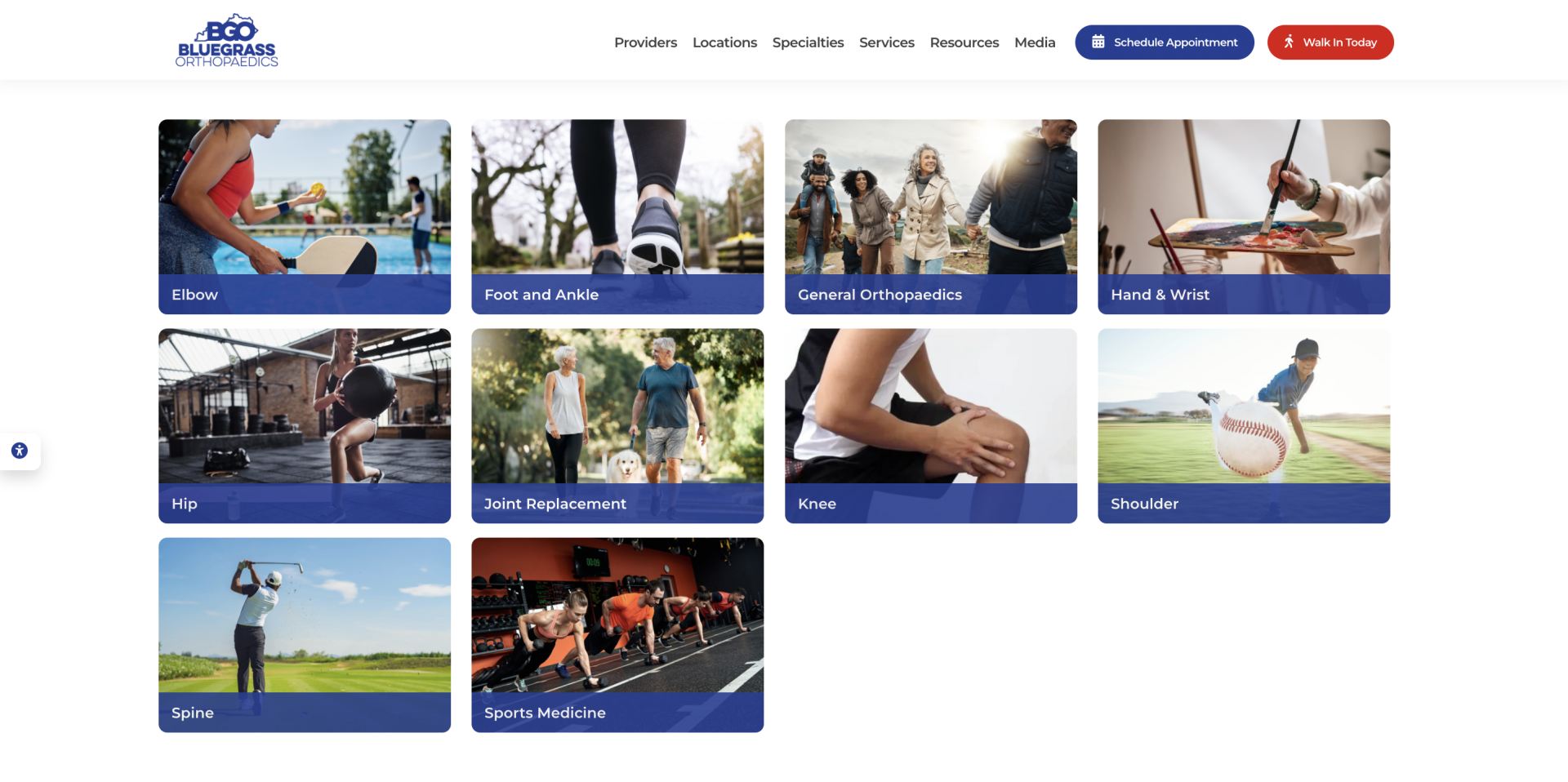
2. Services, Specialties & Solutions
Goal: Clearly explain what you do and how you do it.
- Break down your main service into sub-services or treatment options.
- Use clear H2/H3 headings for each subtopic to help Google and AI models understand your page structure.
- Explain how your approach treats the condition introduced in the overview.
- Example: For cataract surgery, sub-sections might include “Laser-Assisted Cataract Surgery,” “Premium Lens Options,” and “Minimally Invasive Techniques.”
3. Benefits of Treatment
Goal: Help patients picture their life after care.
- Speak to outcomes that matter most to patients (less pain, improved mobility, clearer vision, better quality of life).
- Balance emotional appeal (“Get back to enjoying your favorite activities”) with clinical confidence (“Our minimally invasive approach can reduce recovery time by 30%”).
- Use bullet points for scannability.
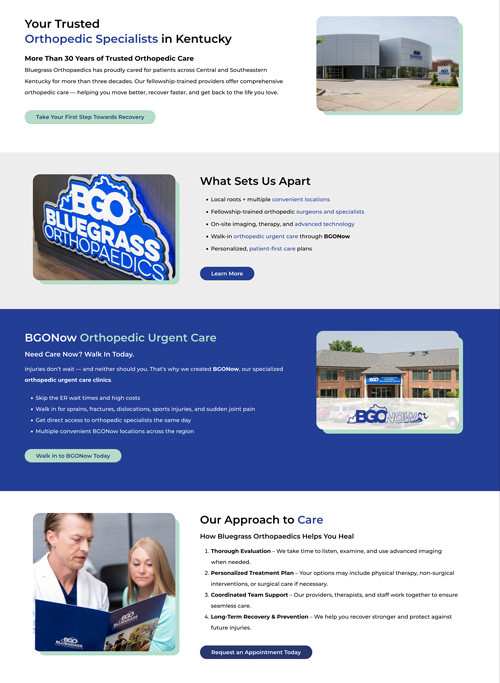
4. Why Choose Us
Goal: Differentiate your practice and build trust.
- Share what makes you the best choice for this service in your area.
- Include:
- Board certifications, advanced training, fellowships
- Specialized technology or facilities
- Years of experience or number of procedures performed
- Awards, accreditations, and patient satisfaction scores
- SEO Tip: If you have geographic relevance (e.g., “Serving patients from across the Charlotte metro area”), include it here.
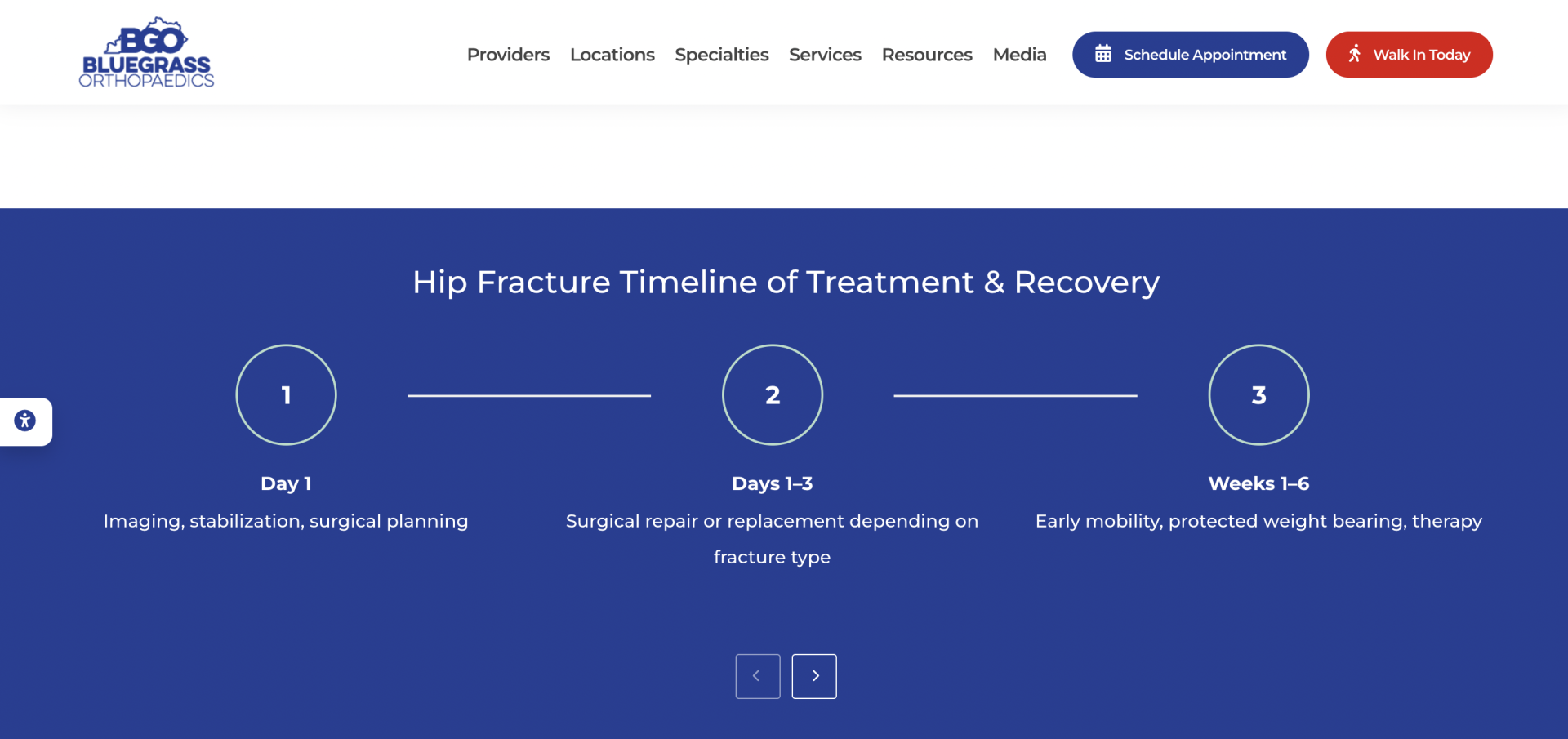
5. Treatment Timeline
Goal: Make the process feel approachable and predictable.
- Outline what a patient can expect from first contact to full recovery.
- Use a visual element like an infographic or numbered steps.
- Example steps:
- Initial Consultation
- Diagnostic Testing
- Day of Procedure
- Recovery Period
- Long-Term Follow-Up
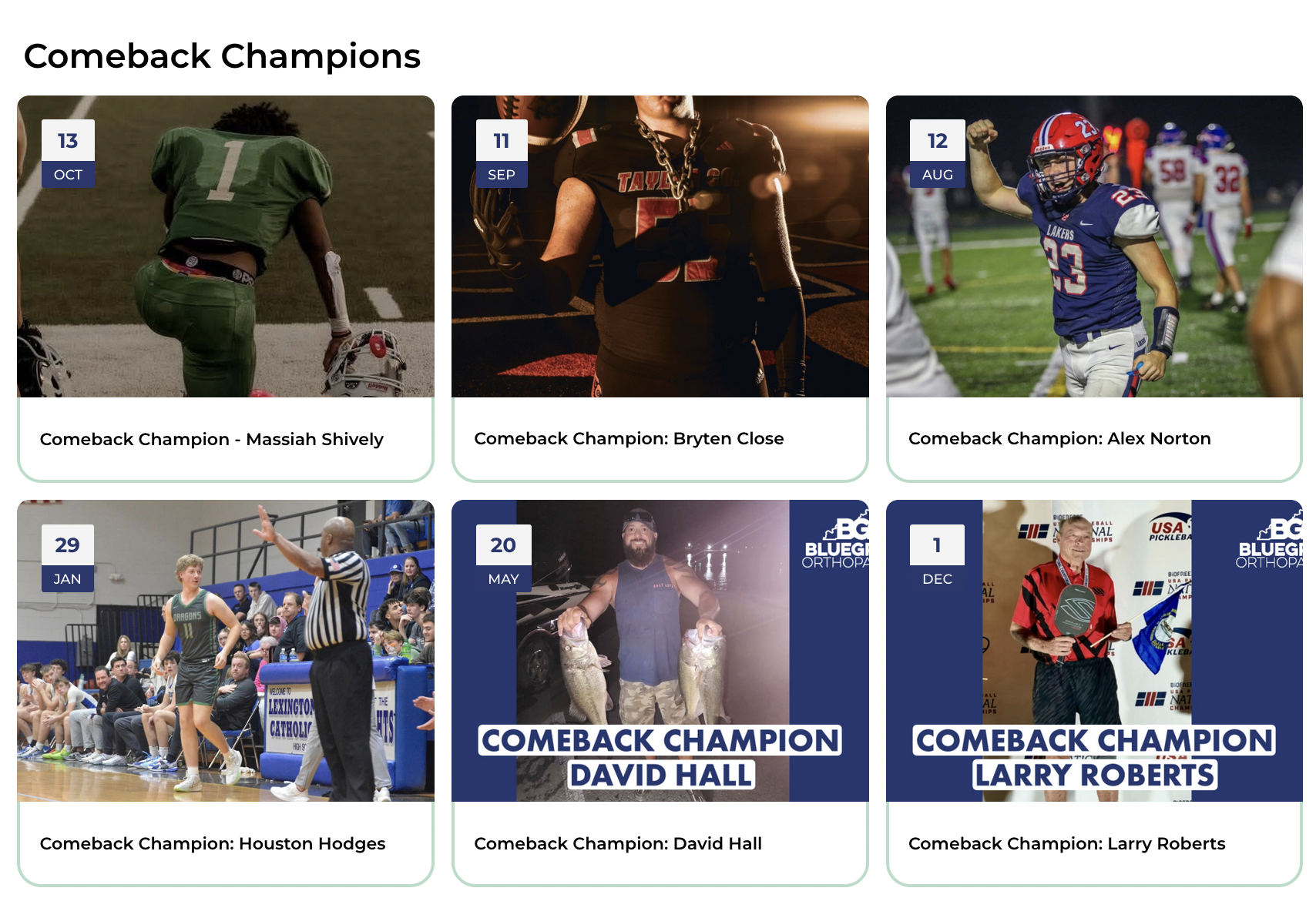
6. Patient Testimonials & Success Stories
Goal: Provide proof through real experiences.
- Use short, compelling patient quotes or link to full case stories.
- If possible, include photos or short videos (with patient consent).
- Tie testimonials directly to the service described (“After my knee replacement, I was walking without pain in just 4 weeks.”).
7. Frequently Asked Questions (FAQ)
Goal: Remove uncertainty and increase conversion.
- Include at least 3-5 service-specific FAQs.
- Examples:
- “How long will I need to recover?”
- “Is the procedure covered by insurance?”
- “What’s the difference between X and Y treatment?”
- SEO Tip: FAQs can help your page appear in Google’s “People Also Ask” and AI-generated answers.
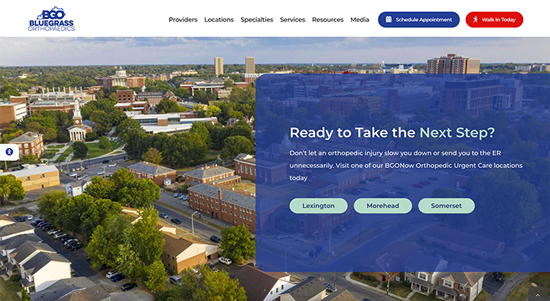
8. Clear Call to Action (CTA)
Goal: Tell the patient exactly what to do next.
- Examples:
- “Request a Consultation”
- “Call Our Office”
- “Schedule an Evaluation”
- Place your CTA both at the end and in at least one other spot mid-page.
- Make it visually stand out with buttons or color.
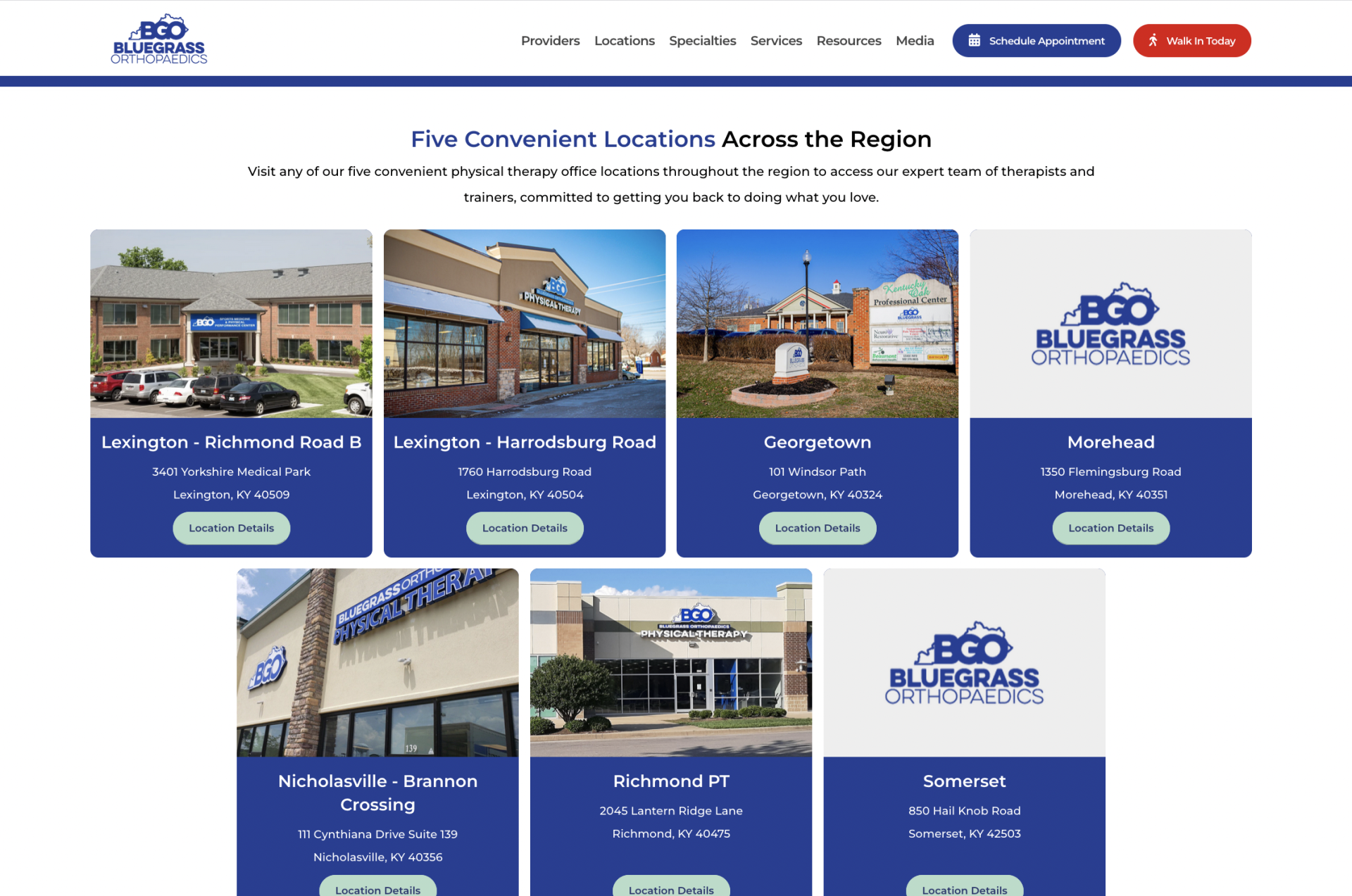
Optional Enhancements (Highly Recommended for SEO & UX)
- Related Providers – Link to provider bios for doctors who perform this service.
- Office Locations – Especially if you have multiple clinics.
- Photo or Video Galleries – Especially before-and-after visuals, where applicable.
- Insurance & Payment Options – Even if brief, this can keep patients from leaving to search elsewhere.
Pro Tip for AI Search Visibility:
Structure your page with clear headings (H2/H3), short paragraphs, and bulleted lists. Use schema markup for medical services if your web team supports it. This helps both Google and AI models understand your content and pull it into rich results and AI overviews.
« Back to Blog
- The Healthcare Website Performance Checklist for 2026
- Redesigning Healthcare Websites for Accessibility: Lessons from Pinehurst Medical Clinic
- Is It Time to Redesign Your Healthcare Website? What to Know Before You Start
- AI Is Changing Web Design—But Custom Development Still Matters in Healthcare
- Understanding HIPAA Compliance and Website Tracking Tools
One Technical Partner. Total Confidence in Your Website.
We handle the platform, compliance, and technical execution - so your team can focus on growth.
© 2026. All rights reserved. E-dreamz, Inc.