

What Healthcare Organizations Can Learn from Pinehurst Medical Clinic
When healthcare organizations begin planning a website redesign, the conversation often starts with visuals:
- Modern layouts
- Cleaner branding
- Better mobile experiences
But the most successful healthcare website redesigns start somewhere else: Accessibility.
Because in healthcare, accessibility isn’t just about compliance—it’s about patient access.
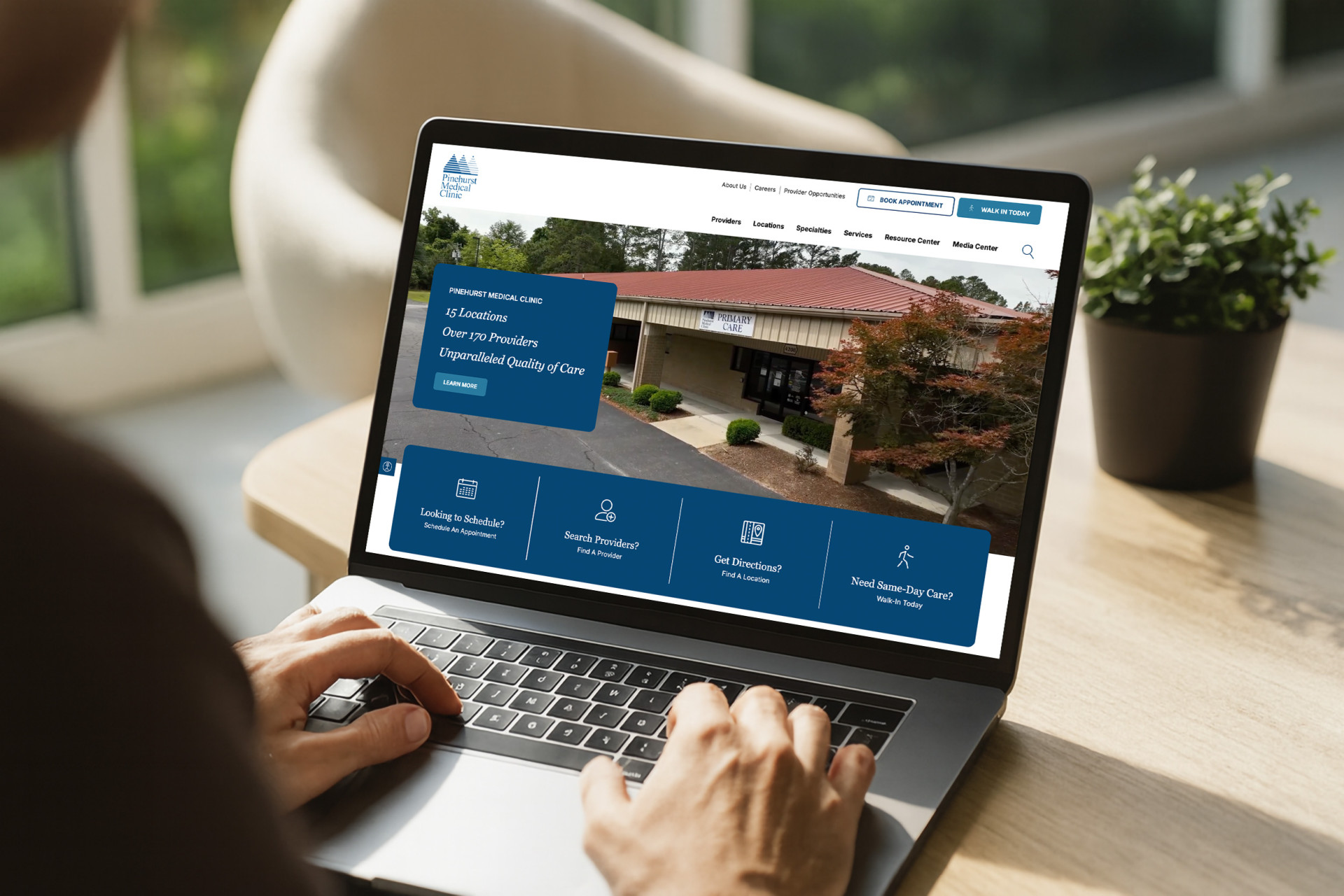
And the website for Pinehurst Medical Clinic offers a strong example of how thoughtful structure, patient-first UX, and accessible design principles can create a better digital experience for everyone.
Accessibility Is More Than a Compliance Checklist
Healthcare websites serve a wide range of users:
- Older adults
- Patients with visual impairments
- Users relying on screen readers
- Individuals navigating stressful medical situations
- Mobile users searching for quick answers
A truly accessible healthcare website reduces friction and helps patients complete important tasks quickly and confidently.
That’s what makes accessibility such a critical part of any redesign strategy.
What Pinehurst Medical Clinic Gets Right
Clear Access to Key Actions
One of the biggest strengths of the Pinehurst Medical Clinic website is its focus on core patient actions:
- Schedule appointments
- Find providers
- Locate offices
- Access patient resources
These actions are easy to identify and consistently placed throughout the experience.
Good accessibility starts with making important tasks easier to complete.
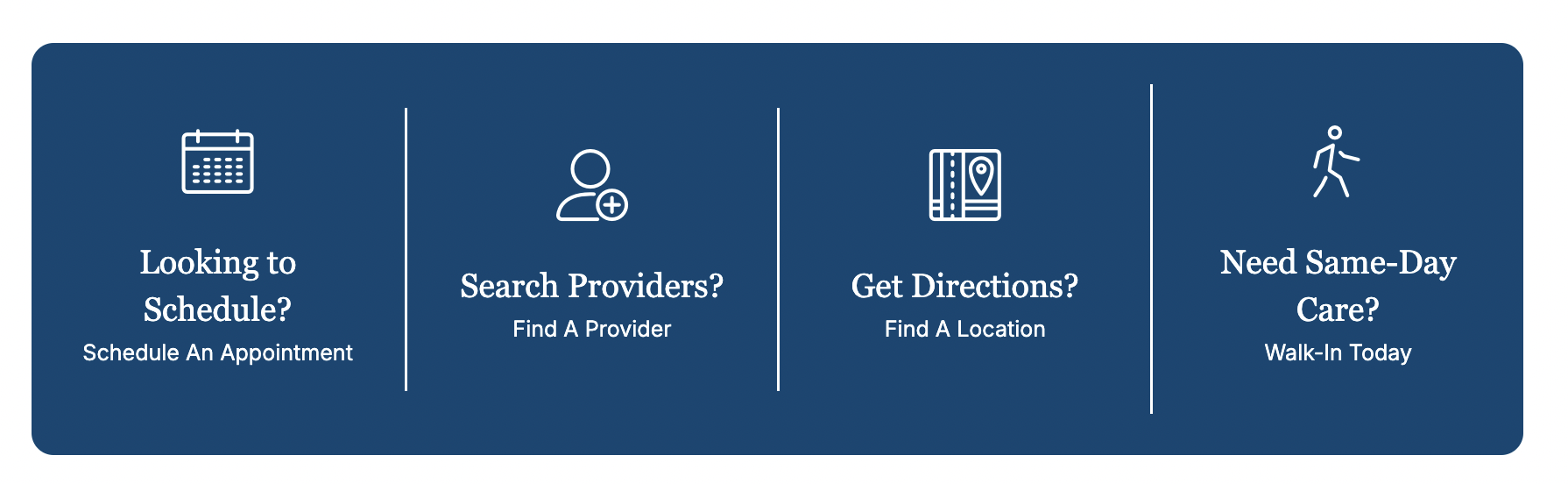
UX-friendly call-to-action bar on Pinehurst Medical Center website
Predictable, Patient-Friendly Navigation
The site uses:
- Logical menu structures
- Clear content hierarchy
- Organized specialties and services
This improves usability for all visitors, while also supporting accessibility best practices for:
- Screen readers
- Cognitive accessibility
- Keyboard navigation
Consistency matters—especially in healthcare.
Built-in Accessibility Controls
Pinehurst also includes built-in accessibility controls that allow users to:
- Resize text
- Adjust contrast
- Simplify the visual experience
While accessibility overlays alone are not enough, these tools can still provide meaningful usability improvements for patients who need immediate visual adjustments.
Strong Content Organization
Healthcare content can get overwhelming fast—but Pinehurst keeps it structured and digestible.
- Services are grouped logically
- Specialties are clearly defined
- Supporting resources are easy to locate
This improves accessibility by:
- Making content easier to scan
- Helping users find information without cognitive overload
- Supporting assistive technologies through clearer hierarchy
Good structure = better accessibility.
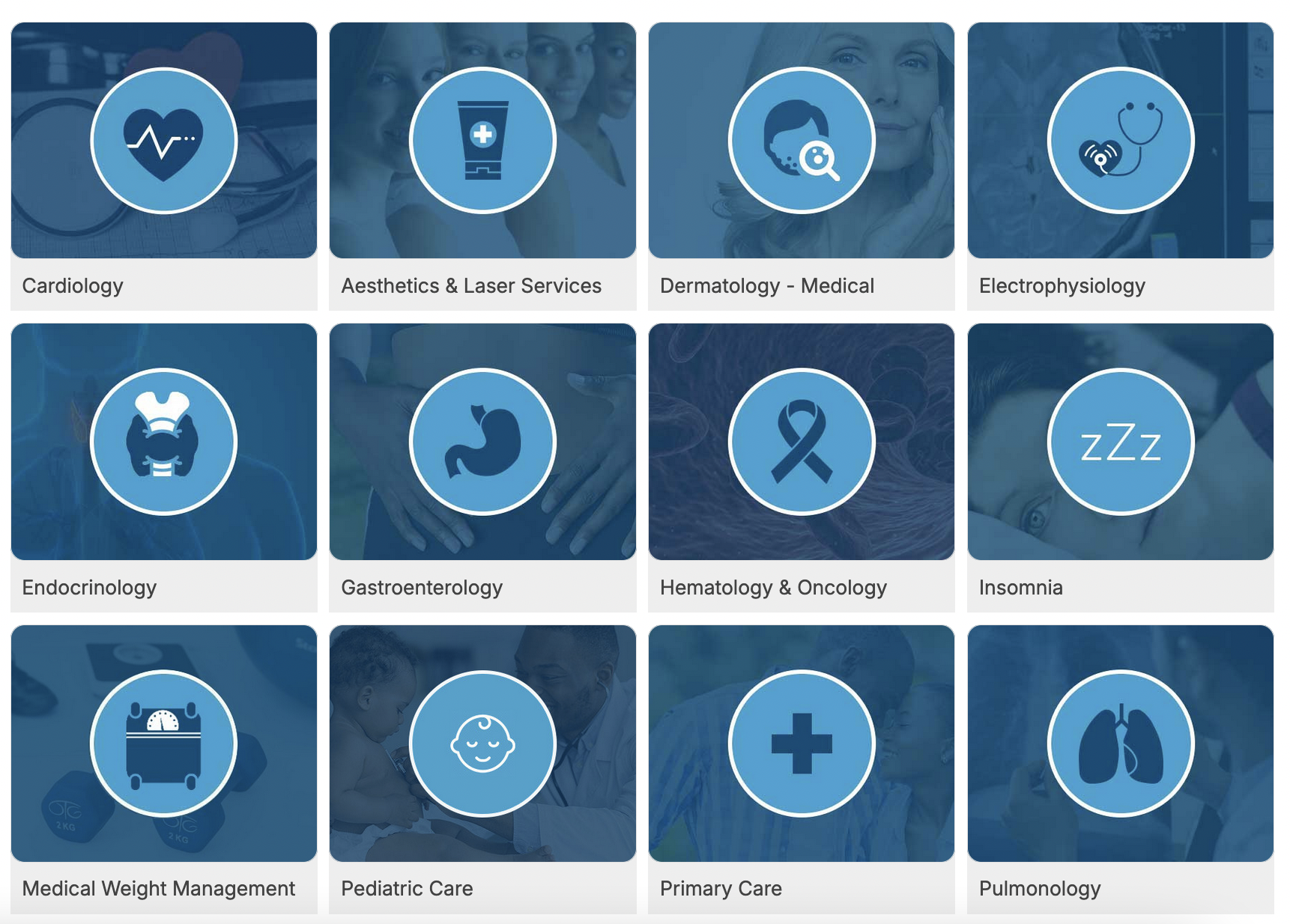
Services grid on Pinehurst Medical Center website
Action-Oriented Design (That Reduces Friction)
The site does a great job of guiding users toward completion of key tasks:
- Prominent CTAs
- Clear next steps
- Minimal distractions
For patients—especially those dealing with pain, stress, or urgency—this matters.
Accessibility Helps SEO and Patient Engagement
Many healthcare organizations are surprised to learn that accessibility improvements often improve SEO performance as well.
Accessible websites typically benefit from:
- Better semantic structure
- Cleaner heading hierarchy
- Improved mobile usability
- Faster load times
- Better crawlability
- More descriptive links and navigation
- Lower bounce rates
Search engines and assistive technologies both rely heavily on properly structured content. When websites are designed with accessibility in mind, they often become easier for both users and search engines to understand.
That creates a better overall patient experience while supporting long-term digital marketing goals.
The Role of CMS Platforms in Accessibility
Technology decisions also play a major role in long-term accessibility success.
Many healthcare organizations struggle because their websites rely heavily on third-party plugins, disconnected tools, or outdated templates that make accessibility maintenance difficult over time.
This is where purpose-built healthcare CMS platforms like Remedy CMS can make a major difference.
Rather than forcing healthcare organizations to patch together accessibility solutions, Remedy CMS was designed specifically for healthcare digital experiences, including:
- Accessibility-conscious development standards
- Flexible content structures
- Better control over semantic markup
- Healthcare-specific integrations
- Simplified content governance
- Reduced dependency on vulnerable plugins
- Scalable multisite and multilocation support
Accessibility should not become an afterthought added during remediation. It should be part of the foundation from the beginning.
Final Thoughts
Pinehurst Medical Clinic is a strong example of how healthcare organizations can create digital experiences that feel clean, organized, and patient-focused while supporting accessibility best practices.
The biggest takeaway is this:
Accessible healthcare websites are not just about compliance. They are about improving patient access, reducing frustration, building trust, and creating digital experiences that work for everyone.
As accessibility expectations continue to evolve across healthcare, organizations that prioritize inclusive UX now will be far better positioned for the future — both legally and competitively.
« Back to Blog
- The Healthcare Website Performance Checklist for 2026
- Is It Time to Redesign Your Healthcare Website? What to Know Before You Start
- AI Is Changing Web Design—But Custom Development Still Matters in Healthcare
- Understanding HIPAA Compliance and Website Tracking Tools
- Expanding Graystone Eye’s Digital Ecosystem: A Multi-Brand, Multi-Site Strategy Built for Growth
One Technical Partner. Total Confidence in Your Website.
We handle the platform, compliance, and technical execution - so your team can focus on growth.
© 2026. All rights reserved. E-dreamz, Inc.